5 Tips for Starting Your Charlotte Area Home Search

Let Carolina Living Real Estate Help You With Your Next Real Estate Decision

5 Tips for Starting Your Home Search | MyKCM

In today’s market, low inventory dominates the conversation in many areas of the country. It can often be frustrating to be a first-time homebuyer if you aren’t prepared. Here are five tips from realtor.com’s article“How to Find Your Dream Home—Without Losing Your Mind.”

1. Get Pre-Approved for a Mortgage Before You Start Your Search

One way to show you’re serious about buying your dream home is to get pre-qualified or pre-approved for a mortgage. Even if you’re in a market that is not as competitive, understanding your budget will give you the confidence of knowing whether or not your dream home is within your reach. This will help you avoid the disappointment of falling in love with a home well outside your price range.

2. Know the Difference Between Your ‘Must-Haves’ and ‘Would-Like-To-Haves’

Do you really need that farmhouse sink in the kitchen to be happy with your home choice? Would a two-car garage be a convenience or a necessity? Before you start your search, list all the features of a home you would like. Qualify them as ‘must-haves’‘should-haves’, or ‘absolute-wish list’ items. This will help you stay focused on what’s most important.

3. Research and Choose a Neighborhood Where You Want to Live

Every neighborhood has unique charm. Before you commit to a home based solely on the house itself, take a test-drive of the area. Make sure it meets your needs for “amenities, commute, school district, etc. and then spend a weekend exploring before you commit.”

4. Pick a House Style You Love and Stick to It

Evaluate your family’s needs and settle on a style of home that will best serve those needs. Just because you’ve narrowed your search to a zip code doesn’t mean you need to tour every listing in that vicinity. An example from the article says, “if you have several younger kids and don’t want your bedroom on a different level, steer clear of Cape Cod–style homes, which typically feature two or more bedrooms on the upper level and the master on the main.”

5. Document Your Home Visits

Once you start touring homes, the features of each individual home will start to blur together. The article suggests keeping your camera handy and making notes on the listing sheet to document what you love and don’t love about each property you visit.

Bottom Line

In a high-paced, competitive environment, any advantage you can give yourself will help you on your path to buying your dream home.

How To Get Comfortable In A New City

Moving Homes: How to Get Comfortable in a New City

Moving is sometimes a necessary part of life. While it can be exciting and adventurous, it can also be stressful to develop a new routine in an unfamiliar city. To help avoid the added anxiety during this process, make sure you go into it prepared.

Visit Before the Move

The last thing you want is to move house, need something badly that was forgotten, and not know where to buy a replacement. With that in mind, Trulia suggests trying to visit your new place before you move to get a feel for its ins and outs, as well as make note of local resources. For added support, look to build a network there so you can hit the ground running. If possible, ask friends, family, and even coworkers if they know anyone who would like to meet up with you. Should they have a few contacts you can use, you can chat with them before you deal with the chaos of moving, and you’ll have someone to call if you need advice.

Prep Your Home for Arrival

Of course, the best time to do any work on your property is while it’s empty. So, if your house needs remodeling, attempt to get everything done before it’s filled with your possessions. Then, it’s a matter of prioritizing behind-the-scenes work over the aesthetic tasks of new floors, counters, or a new coat of paint. If you need the home rewired, for example, it could be an extensive project since it involves upgrading the main service panel, installing circuits for each appliance, and adding in electrical outlets.

Get Into the Neighborhood

Getting used to your new area is especially important if you have children and pets. To help them adjust to a fresh routine and atmosphere, try taking them out for walks to learn the neighborhood. If you have kids, they might be interested in meeting other children, so keep an eye out for any community classes, groups, or the local Boy Scouts and Girl Scouts. Similarly, your pets will need plenty of attention and distraction, and dogs might benefit from regular visits to the park. Still, indoor pets may simply need you close to feel reassured, so try to take a few days off of work to get them used to their surroundings.

Decorate for Comfort

One way to get comfortable quickly in an unfamiliar environment is to decorate. To get started, you could focus on giving each room a consistent color scheme. As you decorate and add personal touches to make your property feel like home, try to keep practicality in mind. If you need extra storage, add aesthetic baskets here and there, or place hooks on doors. For added comfort, you could bring out art or decorative pieces that remind you of home, and place them where they can be seen. Even if you end up moving them later, viewing them will give you a reassuring warmth as you go about your day.

Minimize Clutter Before It Starts

Having a chaotic environment breeds stress, and unpacking is going to be just that—chaotic. So, to help minimize any issues developing, take some time to plan out where things will go, particularly items that create clutter. By knowing where items belong, you prevent pile-ups from happening. For instance, you might want to invest in pieces to help you store items, such as a file for loose papers or extra shelving in the kitchen to sort plates and plasticware. It may seem like additional effort, but it can be worth it to ensure your home is a pleasant environment.

Turn to These Additional Resources

The following resources are either required by law or can help you to further familiarize yourself with your new city:

  • Updated your auto insurance. Your zip code can determine the cost of your premiums. So if you live in a highly-populated area, know the rates can be higher. You can reduce the cost of auto insurance by bundling your policies and shopping around.
  • Look for a new dentist in your area.
  • Find a parent-approved daycare center for your kids.
  • Make sure you find a good veterinarian.
  • Stick to your fitness goals by applying for a local gym membership.

Just because you changed houses doesn’t mean you can’t feel at home. With the right preparation, as well as staying active in your new community, you can ease your transition. It will take work, but all worthwhile things do.

Image courtesy of Pexels

iBuyers: What Is the “Cost of Convenience” When Selling Your Charlotte Area Home?

iBuyers: What Is the “Cost of Convenience” When Selling Your Home? | MyKCM

See also: What is the Deal With These Charlotte Guarantee Home Offers?

When thinking about selling their house, homeowners have many options. A relatively new option is using an “iBuyer.” What is an iBuyer?

According to Jovio, the definition is:

“A company or investor that uses Automated Valuation Models (AVMs) to make instant offers on homes. It allows sellers to close on a property quickly. Once sold, the company then turns around and resells the home for a profit.”

Today, there are many iBuyer companies such as OfferPadZillow OffersKnockOpendoor, and Perch. Even some more traditional companies offer the same or similar services (ex. Keller WilliamsRedfinRealogy). Ivy Zelman reported in her ‘Z’ Report that some traditional brokers are partnering with some of the larger iBuyers too:

“Keller Williams announced a partnership with Offerpad, aligning the largest franchise-based brokerage brand in the U.S. with the five-year-old iBuyer. The move follows Realogy’s partnership with Home Partners of America last year as an established brokerage player more directly providing an iBuyer alternative…

Likewise, in early July, Redfin and Opendoor announced a partnership, starting in Phoenix and Atlanta – aligning interests of the 13-year old, tech-enabled and value-focused brokerage with the largest and longest-standing iBuyer. Outside of these larger scale alliances, Zillow’s strategy has been to work with local brokerages as partners on a market-by-market basis.”

Does it make sense to sell your home to an iBuyer?

It depends. Collateral Analytics recently released a study which revealed the advantages and disadvantages of using an iBuyer. According to the study, if the homeowner is looking for the convenience of a quick sale with less uncertainty, using an iBuyer may make sense.

“iBuyers offer quicker closings for sellers who would like to avoid the uncertainty of knowing when and if their home will sell. For motivated sellers who want a predictable sale date and need to move, perhaps a long distance from the current location, there is no question that iBuyers have provided a welcome alternative to traditional brokerage.”

The study, however, also showed there is a cost for that convenienceCollateral Analytics explained:

Traditional brokers fees generally range from 5% to 7% of the sales price…In addition to this cost, buyers typically pay some closing costs including lender related charges in the range of 1% to 3%.”

In contrast:

“iBuyers charge sellers a ‘convenience fee’ of 6% to 9.5%, some also charge the seller for fees typically paid by buyers at closing adding another 1% or more. Most iBuyers will inspect the home, assess a generous home repair allowance and negotiate a (an additional) credit to handle such repairs…Overall the total direct costs, ignoring repair credits, will run 7% to 10% for an iBuyer, versus the typical 5% to 9% combined seller and buyer costs with a traditional broker. Yet, that is not the end of the story or comparison.”

The study went on to explain how iBuyers need to charge even more because they have additional expenses beyond that of the traditional broker. They include:

  1. Carrying costs involving significant amounts of capital – The iBuyer must pay the expenses of the house between the time they purchase it and the time they sell it to a new buyer.
  2. Safeguarding the home risks – A home with an iBuyer ‘For Sale Sign’ alerts anyone passing that the house is vacant. The study suggests that these homes could become targets for vagrants and criminals.
  3. Adverse selection risks – The study explains that since iBuyers use computer models to determine their offer, they may be unaware of certain challenges in the neighborhood that could adversely impact the value.
  4. Potential home price declines – As the survey states:

A downturn in home prices, not forecast by the iBuyer market analysts could be devastating as they ramp up their business platforms, particularly if the cost of capital increases. At the same time, downturns are precisely when the most sellers would want this option.”

Bottom Line

After taking a thorough look at the iBuyer platform, the study concludes that using an iBuyer is more expensive for the homeowner than the traditional brokerage model, but for some sellers, it may still make sense:

“These preliminary empirical results suggest that sellers are paying not just the difference in fees of 2% to 5% more than with traditional agencies, and a generous repair allowance, but another 3% to 5% or more to compensate the iBuyer for liquidity risks and carrying costs. In all, the typical cost to a seller appears to be in the range of 13% to 15% depending on the iBuyer vendor. For some sellers, needing to move or requiring quick extraction of equity, this is certainly worthwhile, but what percentage of the market will want this service remains to be seen.”

How to Increase Your Equity Over the Next 5 Years of Your Charlotte Area Home

Carolina Living Real Estate Real Estate Tips

How to Increase Your Equity Over the Next 5 Years | MyKCM

Many of the questions currently surrounding the real estate industry focus on home prices and where they are heading. The most recent Home Price Expectation Survey (HPES) helps target these projected answers.

Here are the results from the Q2 2019 Survey:

  • Home values will appreciate by 4.1% in 2019
  • The average annual appreciation will be 3.2% over the next 5 years
  • The cumulative appreciation will be 16.8% by 2023
  • Even experts representing the most “bearish” quartile of the survey project a cumulative appreciation of over 6.7% by 2023

What does this mean for you?

A substantial portion of family wealth comes from home equity. As the value of a family’s home (an asset) increases, so does their equity.

How to Increase Your Equity Over the Next 5 Years | MyKCM

Using the projections from the HPES, here is a look at the potential equity a family could earn over the next five years if they purchased a $250,000 home in January of 2019:Based on gains in home equity, their family wealth could increase by $42,000 over that five-year period.

Bottom Line

If you don’t yet own a home, now may be the time to purchase. Owning or moving up to your dream home could allow you to ride the increase in equity of a growing asset.

Home Price Expectation survey – Every quarter, Pulsenomics surveys a distinguished panel of over 100 economists, investment strategists, and housing market analysts regarding their 5-year expectations for future home prices in the United States.

6 Tips to Help You Find Your First Fixer-Upper

Carolina Living Real Estate - Charlotte Real Estate

Fixer-upper homes have become a trend with first-time homebuyers. Whether it’s the romance of reworking an older home or the prospect of making a profit, fixer-uppers can be an exciting challenge to take on. If you’re looking to find your first fixer-upper, but aren’t sure where to start, then the following tips can help out.

Figure Out Your Finances First

Buying a new home, or flipping your first one, is filled with excitement. But don’t let your feelings get in the way of making smart financial decisions. Before you start searching for properties to procure, make sure you know how much house you can afford. Look at your annual income and monthly spending. Factor in major funding concerns, such as down payments and repairs, and pull a copy of your credit report. It’s wise to figure out what kind of loans you’re eligible for and what APR you can expect before you visit your first potential home. 

Stick to Your Budget 

Once you have your finances figured out, be sure to keep your budget at the center of any real estate decisions.  It’s easy to feel an emotional attachment to a beautiful home or be lured in by a hip neighborhood. But you shouldn’t have to struggle to afford a home that works for you, especially if you know you’ll have to foot the bill for repairs, too. Be willing to make some compromises when looking for properties and keep your entire budget in mind including funds set aside for the fixes needed later on down the road. 

Find a Good Real Estate Fit

From price to neighborhood and resell value, there’s a lot to think about when it comes to buying your first fixer-upper. If you’re new to the real estate game, it’s smart to consult a professional to help you out. Look for a real estate professional that has some experience working with handyman specials or fixer-uppers and who knows the areas that interest you the most. Ask friends for recommendations and don’t settle until you find an agent who will truly work to find the right home at the right price.

Tackle These Top Tasks First 

If you’re going to live in your new home, you need to work on projects that make living safe and comfortable first. Most people spend a good deal of time in their bathrooms and kitchens, so begin by focusing your efforts on repairs needed in those areas. Pay special attention to any signs of plumbing or electrical issues, which can raise utility costs or even cause an accident. Kitchen and bathroom remodels tend to add the most to your resale value, so getting these projects done can help you get a better price for your home if you flip it in the future. 

Prepare for DIY Repairs 

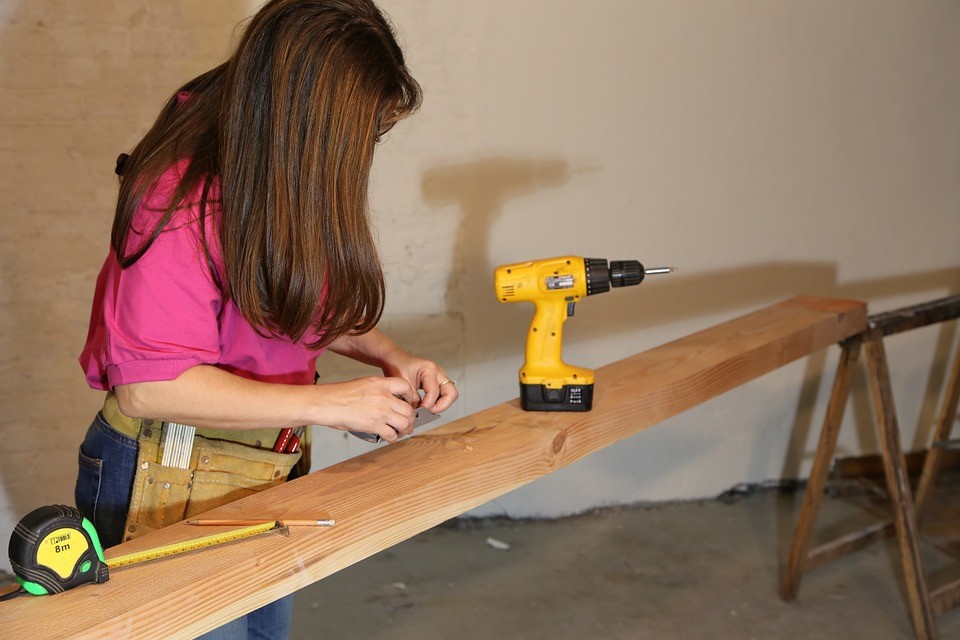
Part of the fun of buying a fixer-upper is taking on some home improvement projects yourself. Before you break out the hammer, make sure you have a good grasp of the project you are getting ready to complete. Make supply lists for each project and know whether you’ll need specialty or power tools to get the job done. Certain must-have tools including a good drill can be a good investment for homeowners. And no matter what project your managing, you should always keep safety a top priority.

Lay Out Long-Term Goals

Chances are, you have good reasons for buying a fixer-upper. Maybe you love the idea of making a historical home your own, or perhaps you’d like more of an investment. If you haven’t set some long-term goals yet, start thinking about them now. Decide whether you’d like to live in your new home or flip it for a profit as soon as repairs are complete. Both options have quite a few perks and cons to consider.

Fixer-uppers can be a fun way to get into real estate. Transforming an old home into the perfect home for you, or someone else, can be a positive experience, but you need to know where to start. So use the tips above to make your real estate wishes a reality.

Photo Credit: Pixabay

As always contact Roby Robertson for assistance in finding the right home for you!

Seniors’ Guide to House Hunting in Charlotte

Buying a home for your retirement years opens up great possibilities. You can choose a location that offers amenities for you to make the most of retirement, which is an extremely liberating reality after a life of hard work. If you’re looking for a slightly smaller metropolitan area that still boasts all of the desirable aspects of city life, then Charlotte, North Carolina might be a great fit for you.

Charlotte is among the top 35 best places in the US to retire, according to rankings from U.S. News, much of this has to do with the abundance of senior-friendly activities the city has to offer. Charlotte has several museums and galleries in the downtown area, and residents have easy access to live theater. Seniors who love the great outdoors can enjoy the area’s many parks, trails and hiking opportunities.

Beyond entertainment and enjoyment, you’ll want to make sure you choose a house that is relatively close to healthcare facilities you may need. In this category, Charlotte remains a great choice. There are 238 physicians per 100,000 population in Charlotte, which exceeds the US average of 210 per 100,000 people. Additionally, in Charlotte, there are several local hospitals that are under magnet status, which is the highest credential for nursing practices across the world.

If you’re ready to start searching for potential homes in Charlotte, here are a few tips you should keep in mind:

Carefully Budget for Retirement

Charlotte residents love that the city is a very affordable place to live. According to real-estate website Zillow, the median home value in Charlotte is $224,200. This is slightly below the national median price of $229,800.

While real estate is definitely cost-effective in Charlotte, you’ll need to keep in mind that affording a house is more than just the down payment and mortgage – you need to make sure you are financially prepared to shoulder any financial burdens that may come with owning a home in the long haul.

Taxes are an important consideration when developing a retirement budget. Having a grip on how much you’ll need to pay in taxes will give you a clearer picture of what exactly you’ll have in your pocket each month. The tax environment in North Carolina is favorable for retirees. According to consumer finance company SmartAsset, Charlotte is considered to be tax-friendly for retirees. The state of North Carolina exempts all Social Security retirement benefits from income taxes, while other forms of retirement income are taxed at the state’s flat income tax rate of 5.499%. The state’s property and sales taxes are both moderate, and seniors may be eligible for a property tax break under homestead exclusion. Your real estate agent can help you determine your eligibility.  

Find Amenities to Help You “Age in Place

In the ideal scenario, seniors can buy a home for their retirement that they can plan to stay in for the long haul. Your realtor can help you target homes that can age with you – even through health issues or mobility limitations. There are certain design elements that can help ensure your new home will always be appropriate for you, including a one-story layout, no-step entryways, wide hallways and shower grab bars.

Consider Other Senior Living Options in Charlotte

Buying a home isn’t the only option you have when it comes to relocating for retirement. If you don’t want to manage the chores that come with owning a home, but would still like to live independently, you should consider moving into a retirement community. These communities, also called “55-plus communities,” provide a safe environment that frees you from some home maintenance responsibilities you may need assistance with, allowing you to focus on those activities that bring you the most joy. Retirement communities often offer different amenities for you to maximize your retirement – including pools, fitness centers, arranged transportation and senior happy hours.

If you think you will need help with activities of daily living, including medication management, bathing or dressing, then an assisted living facility could be the best living option for you. There are many top-rated communities in the Charlotte area and more that are located in surrounding areas. Your realtor can help you narrow down the best communities that will suit your preferences and budget.

Connect With a Reliable Realtor

Having a reliable realtor by your side is an extremely crucial part of the house hunting process. You should take the time to think about and discuss with your realtor both big-picture issues like location, as well as small details like your daily lifestyle preferences. Ask prospective realtors if they’ve been trained in helping senior homebuyers in the 50-plus age range, and have transparent conversations about what you’re looking for in a new home, including budget and timeline.

Whether you are a Charlotte native or a retiree relocating to Charlotte from elsewhere, I can help you find the perfect home and make your move as stress-free as possible. If you are thinking of selling, buying or renting a home and would like more information on my services,  please feel comfortable reaching to me. There is never any pressure placed on you and I am happy to help! Contact me, Roby Robertson, to get started.

How To Be A Better Buyer

Visit houselogic.com for more articles like this.

Copyright 2015 NATIONAL ASSOCIATION OF REALTORS®

Copy
Here’s how the source code will look on your website or blog.

Read more: http://members.houselogic.com/download/web/#ixzz3mgjcLS7H
Follow us: @HouseLogic on Twitter | HouseLogic on Facebook