Must I return a Due Diligence Fee check to the buyer if they demand it?

Important information from NC Realtor Association and Carolina Living Real Estate

QUESTION: I won’t give you all the gory details, but suffice it to say there is a dispute between my buyer client and the seller about whether there is a binding contract on the property between the seller and my client. The seller thinks a contract has been created while my buyer does not. I am holding the buyer’s check for the Due Diligence Fee and was prepared to deliver it to the listing agent when the dispute arose. Now the buyer is demanding that I return the DDF check to her. What am I supposed to do? I know that if there’s a binding contract, the buyer owes the DDF to the seller. Do I hold the DDF in case there is a contract, or do I follow my buyer’s instructions and deliver the check back to her since there’s a dispute about whether a contract has been formed?

ANSWER: Whether or not there is a binding contract, an agent who is holding a Due Diligence Fee check is required by Real Estate Commission Rule 58A.0116 to return it to the buyer upon the buyer’s request. The Rule may be accessed by clicking here. Subsection (b)(4) provides that a broker may accept custody of a check or other negotiable instrument made payable to the seller for a due diligence fee, but only for the purpose of delivering the instrument to the seller.  However, the next sentence of the Rule provides that “[w]hile the instrument is in the custody of the broker, the broker shall, according to the instructions of the buyer, either deliver it to the [seller] or return it to the buyer.”  Since the buyer has instructed you to deliver the DDF check back to her, that’s what you must do to be in compliance with the Rule.

It should be noted that this Rule also requires a listing agent to return a Due Diligence Fee check to the buyer upon the buyer’s demand if the check is in the listing agent’s possession at the time of the demand. For that reason, any DDF check received by a listing agent should be delivered to the seller without delay.

If a binding contract has been formed between the seller and your client, you are correct that the buyer would owe the DDF. If the buyer doesn’t pay it, the seller likely would have the right to go after the buyer for the DDF and any Earnest Money Deposit that may have been payable, and may be entitled to recover attorneys’ fees to boot. See paragraphs 1(d) and 23 of form 2-T. However, the fact that a seller may be entitled to payment of the DDF according to the contract doesn’t affect the duty an agent holding the DDF check owes to the buyer per the Real Estate Commission’s Rule.

© Copyright 2021 – 2024. North Carolina Association of REALTORS®, Inc.

This article is intended solely for the benefit of NC REALTORS® members, who may reproduce and distribute it to other NC REALTORS® members and their clients, provided it is reproduced in its entirety without any change to its format or content, including disclaimer and copyright notice, and provided that any such reproduction is not intended for monetary gain. Any unauthorized reproduction, use or distribution is prohibited.
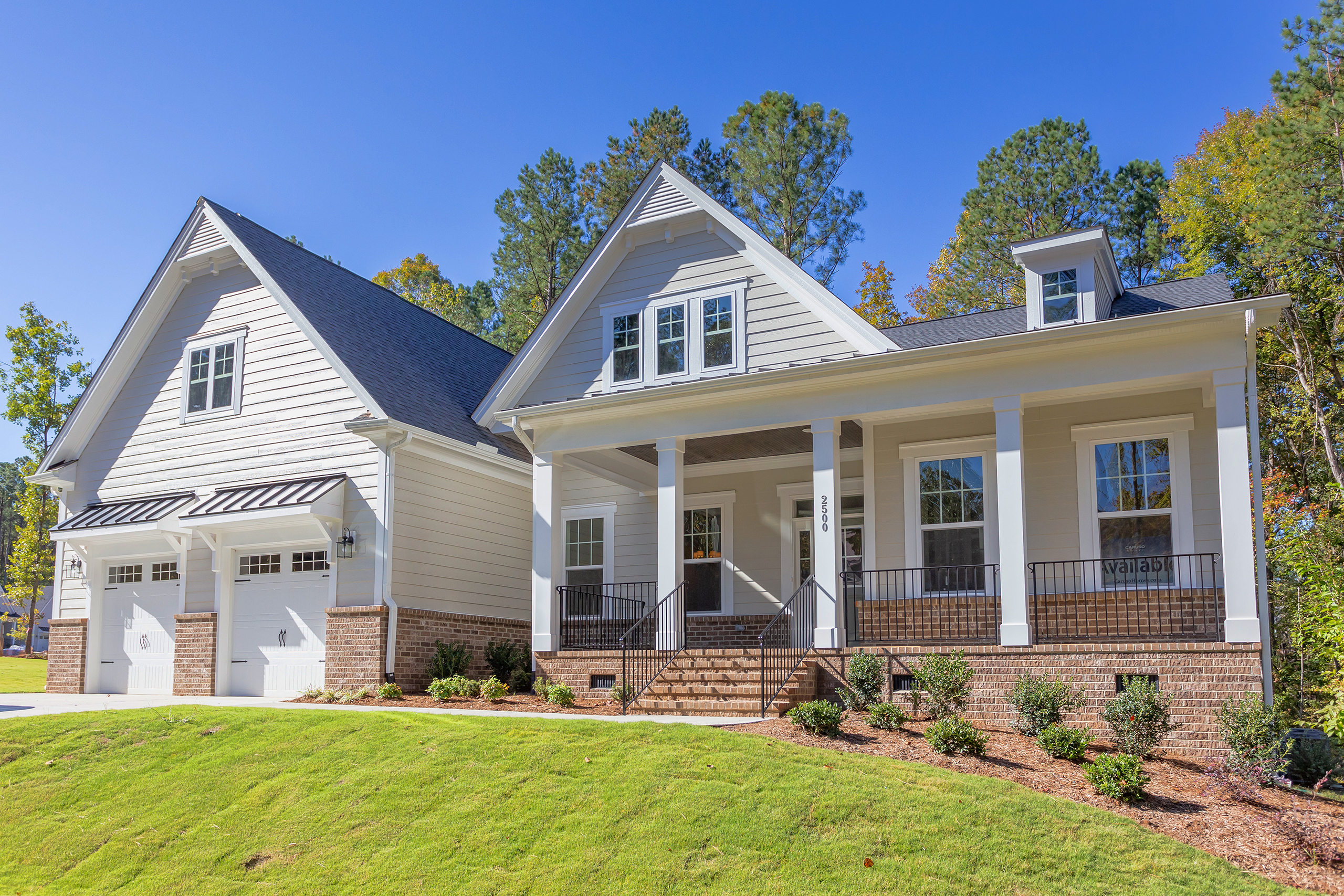
New Listing – Denver NC

PROPOSED. TO BE BUILT. NEW CONSTRUCTION $756,750. This fabulous lot is co-Marketed w/ Caruso Homes & can be purchased separately. Buyer may also work with Caruso Homes to build another of their well-designed, ready-to-build floor plans, or they may choose a builder of their own. Buyer may select their own options, upgrades, and/or elevations ensuring that every detail is crafted to perfection. Buyer may choose any of Caruso’s models that will fit on the lot. Photos and tours may display optional features and upgrades that are not included in the price. Pictures are of proposed models and do not reflect the final appearance of the house and yard settings. All prices are subject to change without notice. Final pricing, square footage, features, options and lot estimates will vary per buyer selections. Contact Sheryl Love at (240) 927-2951 or slove@carusohomes.com for more info about building w/ Caruso Homes. see sign on Wingate hill rd. Turn down road at sign and lot is on the right.

Caruso Homes: Caruso Homes | New Homes in Maryland, North Carolina, Pennsylvania, and Delaware

Ready To Sell, but Don’t Know Where You’ll Go?

Carolina Living Real Estate Can Help and Save You Money!

Ready To Sell, but Don’t Know Where You’ll Go? [INFOGRAPHIC] | MyKCM

Some Highlights

  • If you’re thinking of selling your house but don’t know what you should buy, you have options.
  • Existing homes offer a wide variety of home styles, an established neighborhood, and lived-in charm. Meanwhile, new home construction lets you create your perfect home, cash in on energy efficiency, and minimize repairs.
  • Whether you’re looking for newly built or existing homes, both have their perks. If you’re ready to sell your house, let’s connect today to go over the perks of both existing and newly built homes to find out what’s right for you.

Charlotte: In Today’s Market, Listing Prices Are Like an Auction’s Reserve Price

In Today’s Market, Listing Prices Are Like an Auction’s Reserve Price | MyKCM

For generations, the process of buying and selling a home never really changed. A homeowner would try to estimate the market value of their house, then tack on a little extra to give themselves some negotiating room. That figure would become the listing price. Buyers would then try to determine how much less than the full price they could offer and still get the home. As a result, the listing price was generally the ceiling of the negotiation. The actual sales price would almost always be somewhat lower than what was listed. It was unthinkable to pay more than what the seller was asking.

Today is different.

The record-low supply of homes for sale coupled with very strong buyer demand is leading to a rise in bidding wars on many homes. Because of this, homes today often sell for more than the list price. In some cases, they sell for a lot more.

According to Lawrence YunChief Economist at the National Association of Realtors (NAR):

“For every listing there are 5.1 offers. Half of the homes are being sold above list price.”

You may need to change the way you look at the asking price of a home.

In this market, you likely can’t shop for a home with the former approach of negotiating to a lower price.

Due to the low supply of houses for sale, many homes are now being offered in an auction-like atmosphere in which the highest bidder wins the home. In an actual auction, the seller of an item agrees to take the highest bid, and many sellers set a reserve price on the item they’re selling. A reserve price is the minimum amount a seller will accept as the winning bid.

When navigating a competitive housing market, think of the list price of the house as the reserve price at an auction. It’s the minimum the seller will accept in many cases. Today, the asking price is often becoming the floor of the negotiation rather than the ceiling. Therefore, if you really love a home, know that it may ultimately sell for more than the sellers are asking. So, as you’re navigating the homebuying process, make sure you know your budget, know what you can afford, and work with a trusted advisor who can help you make all the right moves as you buy a home.

Bottom Line

Someone who’s more familiar with the housing market of the past than that of today may think it’s foolish to offer more for a home than the listing price. However, frequent and competitive bidding wars are creating an auction-like atmosphere in many real estate transactions right now. Let’s connect today so you have a trusted real estate professional on your side to provide the best advice on how to make a competitive offer on a home.

Will Forbearance Plans Lead to a Tsunami of Foreclosures?

Carolina Living Real Estate Tips

Will Forbearance Plans Lead to a Tsunami of Foreclosures? | MyKCM

At the onset of the economic disruptions caused by the COVID pandemic, the government quickly put into place forbearance plans to allow homeowners to remain in their homes without making their monthly mortgage payments. Today, almost three million households are actively in a forbearance plan. Though 29.4% of those in forbearance have continued to stay current on their payments, many have not.

Yanling Mayer, Principal Economist at CoreLogic, recently revealed:

“A distributional analysis of forborne loans’ payment status reveals that more than one third (39.1%) of all forborne loans are now 150+ days behind payment, while as many as 1-in-4 (25.5%) are 180+ days past due.”

These homeowners have been given permission to not make their payments, but the question now is: how many of them will be able to catch up after their forbearance program ends? There’s speculation that a forthcoming wave of foreclosures could be the result, and that could lead to another crash in home values like we saw a decade ago.

However, today’s situation is different than the 2006-2008 housing crisis as many homeowners have tremendous amounts of equity in their homes.

What are the experts saying?

Over the last 30 days, several industry experts have weighed in on this subject.

Michael Sklarz, President at Collateral Analytics:

“We may very well see a meaningful increase in the number of homes listed for sale as these borrowers choose to sell at what is arguably an intermediate top in the market and downsize to more affordable homes rather than face foreclosure.”

Odeta Kushi, Deputy Chief Economist at First American:

“The foreclosure process is based on two steps. First, the homeowner suffers an adverse economic shock…leading to the homeowner becoming delinquent on their mortgage. However, delinquency by itself is not enough to send a mortgage into foreclosure. With enough equity, a homeowner has the option of selling their home, or tapping into their equity through a refinance, to help weather the economic shock. It is a lack of sufficient equity, the second component of the dual trigger, that causes a serious delinquency to become a foreclosure.”

Don Layton, Senior Industry Fellow at the Joint Center for Housing Studies of Harvard University:

“With a greater cushion of equity, troubled homeowners have dramatically improved options: a greater ability to access funding (e.g. home equity lines) to keep paying monthly expenses until family finances might recover, improved ability to qualify for and support a loan modification, and, if push comes to shove, the ability to sell the home and monetize their increased net worth while reducing monthly payment obligations. So, what should lenders and servicers expect: a large number of foreclosures or only a modest increase? I believe the latter.”

With today’s positive equity situation, many homeowners will be able to use a loan modification or refinance to stay in their homes. If not, some will go to foreclosure, but most will be able to sell and walk away with their equity.

Won’t the additional homes on the market impact prices?

Distressed properties (foreclosures and short sales) sell at a significant discount. If homeowners sell instead of going into foreclosure, the impact on the housing market will be much less severe.

We must also realize there is currently an unprecedented lack of inventory on the market. Just last week, realtor.com explained:

“Nationally, the number of homes for sale was down 39.6%, amounting to 449,000 fewer homes for sale than last December.”

It’s important to remember that there weren’t enough homes for sale even then, and inventory has only continued to decline.

The market has the potential to absorb half a million homes this year without it causing home values to depreciate.

Bottom Line

The pandemic has led to both personal and economic hardships for many American households. The overall residential real estate market, however, has weathered the storm and will continue to do so in 2021.

The Biggest Issue Facing Housing Next Year

Call Carolina Living Real Estate for Comprehensive Review of Your Real Estate Needs!

The Biggest Issue Facing Housing Next Year | MyKCM

This coming year the housing market will be defined by 3 things- inventoryinterest rates, and appreciation.  But the biggest issue the housing market will face in 2020 is an inventory shortage.  There aren’t enough homes on the market for buyers, especially on the lower end of the market. This is a topic that has come up frequently within the past several months.

Based on what is forecasted, we know that interest rates are projected to remain low and that appreciation is expected to continue as we move into 2020.  Additionally, the upcoming election will provoke many unique perspectives on the health of the US housing market. The challenge will be understanding what is actually happening and how you can best position yourself if you are thinking of buying or selling your home.

Here are several perspectives to consider on the inventory issue facing housing next year:

According to realtor.com:

“Despite increases in new construction, next year will once again fail to bring a solution to the inventory shortage that has plagued the housing market since 2015. Inventory could reach a historic low as a steady flow of demand, especially for entry level homes, and declining seller sentiment combine to keep a lid on sales transactions.”

Diana Olick at CNBC:

“Inventory has been falling annually for five straight months, after it recovered slightly toward the end of last year, due to a spike in mortgage rates. Rates began falling again by spring of this year. Homebuilders have been increasing production slowly, but it’s not enough to meet the increasingly strong demand.”

George Ratiu, Senior Economist with realtor.com

“As millennials — the largest cohort of buyers in U.S. history — embrace homeownership and take advantage of this year’s unexpectedly low mortgage rates, demand is outstripping supply, causing inventory to vanish. The housing shortage is felt acutely at the entry-level of the market, where most millennials are looking to break into the market for their first home.”

Bottom Line

The most important thing you can do is understand what is happening in your local market. You may not be able to avoid some of the issues brought on by low inventory, but you can be educated and prepared. Let’s connect and discuss the options that make the most sense for you and your family.

How To Get Comfortable In A New City

Moving Homes: How to Get Comfortable in a New City

Moving is sometimes a necessary part of life. While it can be exciting and adventurous, it can also be stressful to develop a new routine in an unfamiliar city. To help avoid the added anxiety during this process, make sure you go into it prepared.

Visit Before the Move

The last thing you want is to move house, need something badly that was forgotten, and not know where to buy a replacement. With that in mind, Trulia suggests trying to visit your new place before you move to get a feel for its ins and outs, as well as make note of local resources. For added support, look to build a network there so you can hit the ground running. If possible, ask friends, family, and even coworkers if they know anyone who would like to meet up with you. Should they have a few contacts you can use, you can chat with them before you deal with the chaos of moving, and you’ll have someone to call if you need advice.

Prep Your Home for Arrival

Of course, the best time to do any work on your property is while it’s empty. So, if your house needs remodeling, attempt to get everything done before it’s filled with your possessions. Then, it’s a matter of prioritizing behind-the-scenes work over the aesthetic tasks of new floors, counters, or a new coat of paint. If you need the home rewired, for example, it could be an extensive project since it involves upgrading the main service panel, installing circuits for each appliance, and adding in electrical outlets.

Get Into the Neighborhood

Getting used to your new area is especially important if you have children and pets. To help them adjust to a fresh routine and atmosphere, try taking them out for walks to learn the neighborhood. If you have kids, they might be interested in meeting other children, so keep an eye out for any community classes, groups, or the local Boy Scouts and Girl Scouts. Similarly, your pets will need plenty of attention and distraction, and dogs might benefit from regular visits to the park. Still, indoor pets may simply need you close to feel reassured, so try to take a few days off of work to get them used to their surroundings.

Decorate for Comfort

One way to get comfortable quickly in an unfamiliar environment is to decorate. To get started, you could focus on giving each room a consistent color scheme. As you decorate and add personal touches to make your property feel like home, try to keep practicality in mind. If you need extra storage, add aesthetic baskets here and there, or place hooks on doors. For added comfort, you could bring out art or decorative pieces that remind you of home, and place them where they can be seen. Even if you end up moving them later, viewing them will give you a reassuring warmth as you go about your day.

Minimize Clutter Before It Starts

Having a chaotic environment breeds stress, and unpacking is going to be just that—chaotic. So, to help minimize any issues developing, take some time to plan out where things will go, particularly items that create clutter. By knowing where items belong, you prevent pile-ups from happening. For instance, you might want to invest in pieces to help you store items, such as a file for loose papers or extra shelving in the kitchen to sort plates and plasticware. It may seem like additional effort, but it can be worth it to ensure your home is a pleasant environment.

Turn to These Additional Resources

The following resources are either required by law or can help you to further familiarize yourself with your new city:

  • Updated your auto insurance. Your zip code can determine the cost of your premiums. So if you live in a highly-populated area, know the rates can be higher. You can reduce the cost of auto insurance by bundling your policies and shopping around.
  • Look for a new dentist in your area.
  • Find a parent-approved daycare center for your kids.
  • Make sure you find a good veterinarian.
  • Stick to your fitness goals by applying for a local gym membership.

Just because you changed houses doesn’t mean you can’t feel at home. With the right preparation, as well as staying active in your new community, you can ease your transition. It will take work, but all worthwhile things do.

Image courtesy of Pexels

What You Need to Know About PMI Insurance

AKA: Private Mortgage Insurance (PMI)

What You Need to Know About Private Mortgage Insurance (PMI) | MyKCM

Whether it is your first time or your fifth, it is always important to know all the facts when it comes to buying a home. With the large number of mortgage programs available that allow buyers to purchase homes with down payments below 20%, you can never have too much information about Private Mortgage Insurance (PMI).

What is PMI?

Freddie Mac defines PMI as:

“An insurance policy that protects the lender if you are unable to pay your mortgage. It’s a monthly fee, rolled into your mortgage payment, that is required for all conforming, conventional loans that have down payments less than 20%.

Once you’ve built equity of 20% in your home, you can cancel your PMI and remove that expense from your mortgage payment.”

As the borrower, you pay the monthly premiums for the insurance policy, and the lender is the beneficiary. Freddie Mac goes on to explain that:

“The cost of PMI varies based on your loan-to-value ratio – the amount you owe on your mortgage compared to its value – and credit score, but you can expect to pay between $30 and $70 per month for every $100,000 borrowed.” 

According to the National Association of Realtors, the average down payment for all buyers last year was 13%. For first-time buyers, that number dropped to 7%, while repeat buyers put down 16% (no doubt aided by the sale of their homes). This just goes to show that for a large number of buyers last year, PMI did not stop them from buying their dream homes.

What You Need to Know About Private Mortgage Insurance (PMI) | MyKCM

Here’s an example of the cost of a mortgage on a $200,000 home with a 5% down payment & PMI, compared to a 20% down payment without PMI:The larger the down payment you can make, the lower your monthly housing cost will be, but Freddie Mac urges you to remember:

“It’s no doubt an added cost, but it’s enabling you to buy now and begin building equity versus waiting 5 to 10 years to build enough savings for a 20% down payment.”

Bottom Line

If you have questions about whether you should buy now or wait until you’ve saved a larger down payment, let’s get together to discuss our market’s conditions and help you make the best decision for you and your family.

Put Your Charlotte Housing Costs to Work!

How to Put Your Housing Cost to Work for You

How to Put Your Housing Cost to Work for You | MyKCM

Your Charlotte and Lake Norman area Realtor wants to keep you informed. Please contact Roby Robertson with any of your Real Estate Questions! Warm weather is upon us and the market will begin to build!!

There has been a lot written about the benefits of homeownership. One benefit that continues to rise to the top is the added wealth homeowners gain simply by paying their mortgage while their home increases in value over time.

The National Association of Realtors (NAR) recently broke down the equity gained from price appreciation and principal payments in their Economists Outlook Blog. Homeowners who purchased their homes five years ago have already gained almost $80,000 in equity over that time with 80% of the gains coming from price appreciation.

For a homeowner who purchased their home 30 years ago, they have gained nearly $250,000 in equity with 70% coming from price increases. The full results can be seen in the chart below.

How to Put Your Housing Cost to Work for You | MyKCM

According to the Home Price Expectation Survey, a family who purchased a median priced home this January can expect to gain more than $42,000 over the next five years simply from price appreciation alone.

Bottom Line

Your home is one of the only investments you can live inside as you pay it off over time. If you are ready to use your housing costs to build wealth, let’s get together to discuss how to make your dream a reality.